+

In stock *In Stock - Subject to stock availability at point of fulfilment. In the event whereby the item is out of stock or unable to provide the service, 1Outlets will cancel the order and issue a Full refund in-store credit to you. SKU : 0bf095122b726f798dcafca67172d2fb
**Free Shipping Worldwide available - Shipping time may vary depending on the address.
**Circumstances Reroute - This is a time of great stress and uncertainty. We are actively validating, routing and re-routing orders with our overseas merchants, logistic partners and airlines. Deliveries and supply may expect delays.
**In Stock (Low Inventory Warning) - Subject to stock availability at point of fulfilment. In the event whereby the item is out of stock or unable to provide the service, 1Outlets will cancel the order and issue a Full refund in-store credit to you (See Refunds).
**Report or Request Removal - Any copyrighted, DMCA, inappropriate, offensive, prohibited, potentially Illegal Listings (Submit doc here).
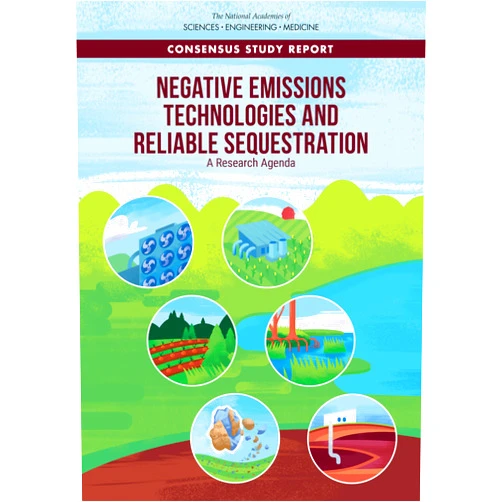
The Negative Emissions Technologies and Reliable Sequestration: A Research Agenda charts a course toward a cleaner planet for generations to come. This vital report, from the National Academies of Sciences, Engineering, and Medicine, dives into the possibilities of carbon dioxide removal (CDR) and secure sequestration. Explore how innovative technologies can actively pull carbon from the air, storing it safely and responsibly to tackle climate change and create a healthier tomorrow for all.
Comprehensive Assessment: The report offers a deep dive, meticulously evaluating a range of CDR approaches. This feature examines the feasibility, advantages, and disadvantages of different methods.
Research Agenda: It outlines a focused, actionable research agenda to advance the development and deployment of negative emissions technologies. The report identifies key areas for investigation to improve these technologies.
Technological Focus: Explores cutting-edge technologies like bioenergy with carbon capture and storage (BECCS), direct air capture (DAC), and ocean-based carbon removal. This feature showcases innovative approaches.
Sustainability Evaluation: Thoroughly analyzes the environmental, social, and economic implications of each CDR method. It considers potential impacts.
Policy Recommendations: Provides key recommendations for policymakers, aiding the responsible development and implementation of carbon removal strategies. This feature provides actionable insights.
Mitigation of Climate Change: Offers strategies to actively reduce greenhouse gas (GHG) concentrations, counteracting the effects of global warming. The main benefit addresses environmental problems.
Enhanced Environmental Quality: Leads to cleaner air and a reduction of the impacts of climate change, benefiting ecosystems and public health. The benefits go beyond merely reducing GHG.
Economic Opportunities: Creates new sectors within the green economy, sparking innovation, job growth, and investment. The benefits includes financial advantages.
Resilience Building: Boosts the ability of communities and ecosystems to withstand the impacts of climate change. The benefits also improves resilience.
Future-Proofing: Supports the long-term sustainability of the planet, ensuring a healthier and more prosperous future for all. This feature supports a better future.
Independent, Expert Analysis: Backed by the authority and credibility of the National Academies, offering unbiased insights. A panel of unbiased experts analyze.
Forward-Thinking Research: Focuses on the next generation of carbon removal technologies. The product offers forward-looking research.
Holistic Approach: Addresses the full scope of the challenge, from technology to policy, and social impacts. This approach addresses the whole scope of the problem.
Actionable Strategies: The report is more than analysis; it provides a roadmap for progress. The product gives actionable strategies.
Comprehensive and Authoritative: An exceptionally thorough investigation, setting the standard for the field. The features are thorough, setting the standard.
Policymaking: Informing the creation and adoption of effective climate change mitigation policies. This feature supports the policymakers.
Research and Development: Guiding researchers in their investigation and promotion of CDR technologies. This feature supports research and development.
Investment Decisions: Giving insights to investors who wish to support sustainable and environmentally friendly projects. This feature supports investors.
Industry Planning: Informing strategies within industries that are seeking to diminish their carbon footprint. The feature gives planning to industry.
Educational Purpose: Serving as a vital resource for students, educators, and anyone seeking to learn about climate change and its potential solutions. The product gives education.
Dr. Anya Sharma, India, 2023: "This report is a must-read! Its comprehensive analysis is essential for understanding the complexities of carbon removal." Anya Sharma gives insightful review.
Mr. Kenzo Tanaka, Japan, 2023: "A critical resource for navigating the future of climate change solutions. The technology focus is spot on." Kenzo Tanaka provides a good review.
Ms. Fatima Diallo, Senegal, 2024: "This research agenda provides a clear path forward for sustainable practices." Fatima Diallo supports sustainable practices.
Mr. Javier Rodriguez, Spain, 2024: "Invaluable for policy makers who want to implement change effectively." Javier Rodriguez supports policy makers.
Ms. Mei Chen, China, 2024: "I learned a lot. It offers hope for our planet." Mei Chen gives a positive review.
What is Negative Emissions Technology (NET)? NET are technologies designed to remove greenhouse gases such as carbon dioxide directly from the atmosphere.
Why is Carbon Dioxide Removal (CDR) important? CDR is vital for combating climate change as it reduces the overall amount of carbon in the atmosphere, helping to limit global warming.
What are some examples of CDR techniques? Examples include direct air capture, bioenergy with carbon capture and storage (BECCS), afforestation/reforestation, and ocean fertilization.
How can I support CDR efforts? You can support these efforts by staying informed, supporting policies that incentivize CDR, and making sustainable lifestyle choices.
What is the role of the government in supporting CDR? Governments can support CDR through investments in research and development, policy frameworks, and financial incentives.
Embark on a journey toward a healthier planet! With the insights of the ** report, feel empowered to explore innovative solutions. Be a part of the change, ensuring a vibrant future with the power of carbon** removal technologies.
(Beta: User Generated 2024.0007)